
Services
Shoreline protection and stabilization for Central Texas lakefront properties
150+ waterfront projects completed · 1+ Mile of bulkhead installed · 7 Central Texas lakes and waterways served
Bulkheads and retaining walls stabilize shorelines and protect waterfront property. Waterfront Unlimited projects often involve replacing older shoreline structures with new systems designed for durability and longevity.
How We Build
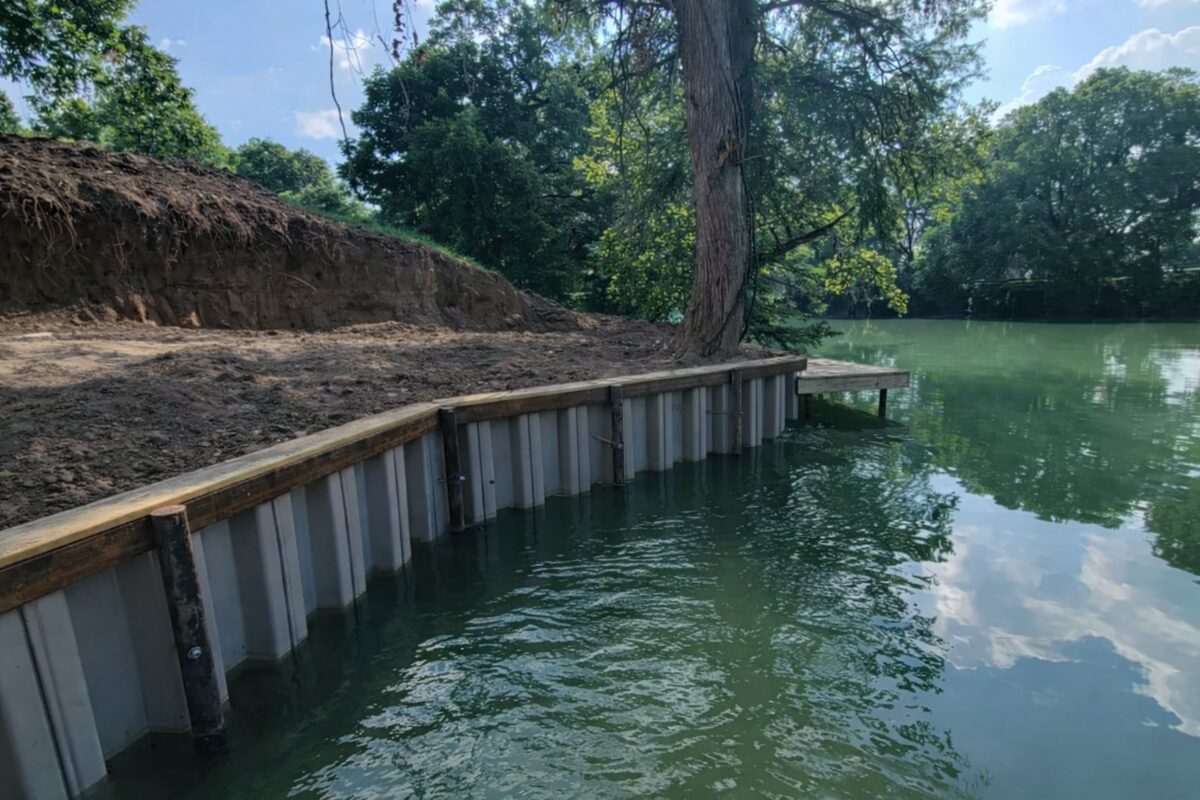
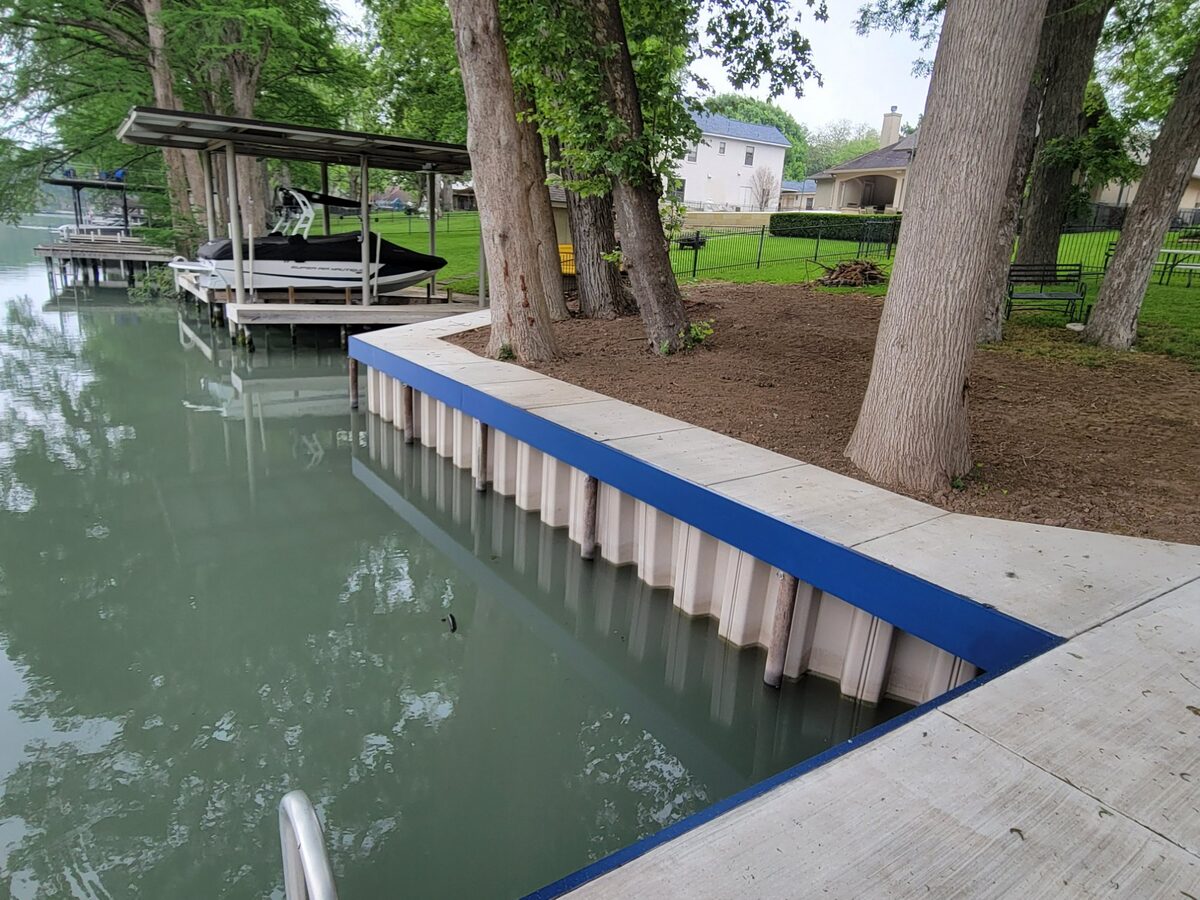
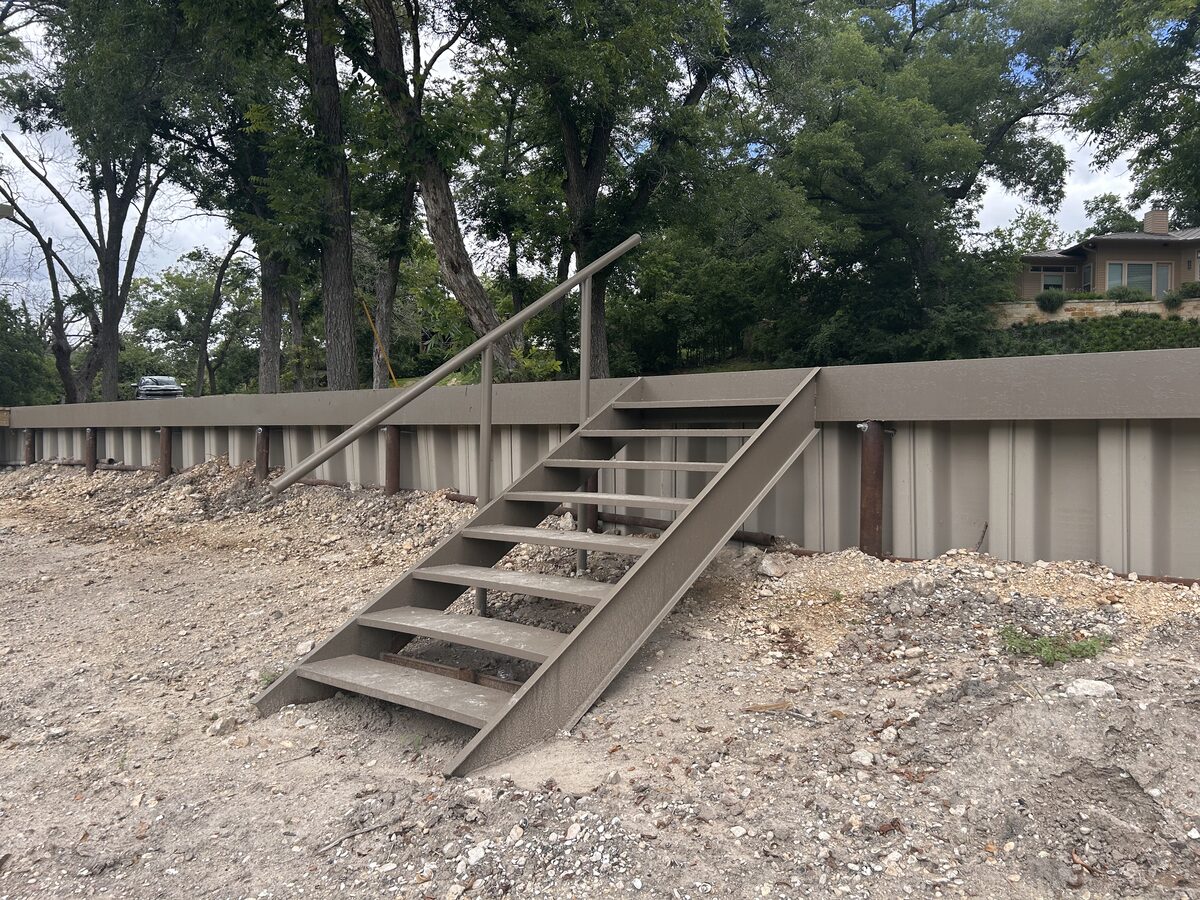
Waterfront Unlimited uses navy-style vinyl wall panels for bulkhead construction. Panels are driven into the lake bed using an excavator-mounted hammer — not by hand. Mechanical driving ensures consistent depth and proper structural performance across the full length of the wall. Depending on location and soil conditions, panels are typically driven three to six feet into the lake or river bed.
To prevent wall failure under lateral soil and water pressure, Waterfront Unlimited installs deadmen — buried anchor supports — set 10 to 12 feet back from the wall face. These deadmen are connected to the bulkhead panels using all-galvanized steel rods, creating a reinforced system that resists pressure over time and through flood events.
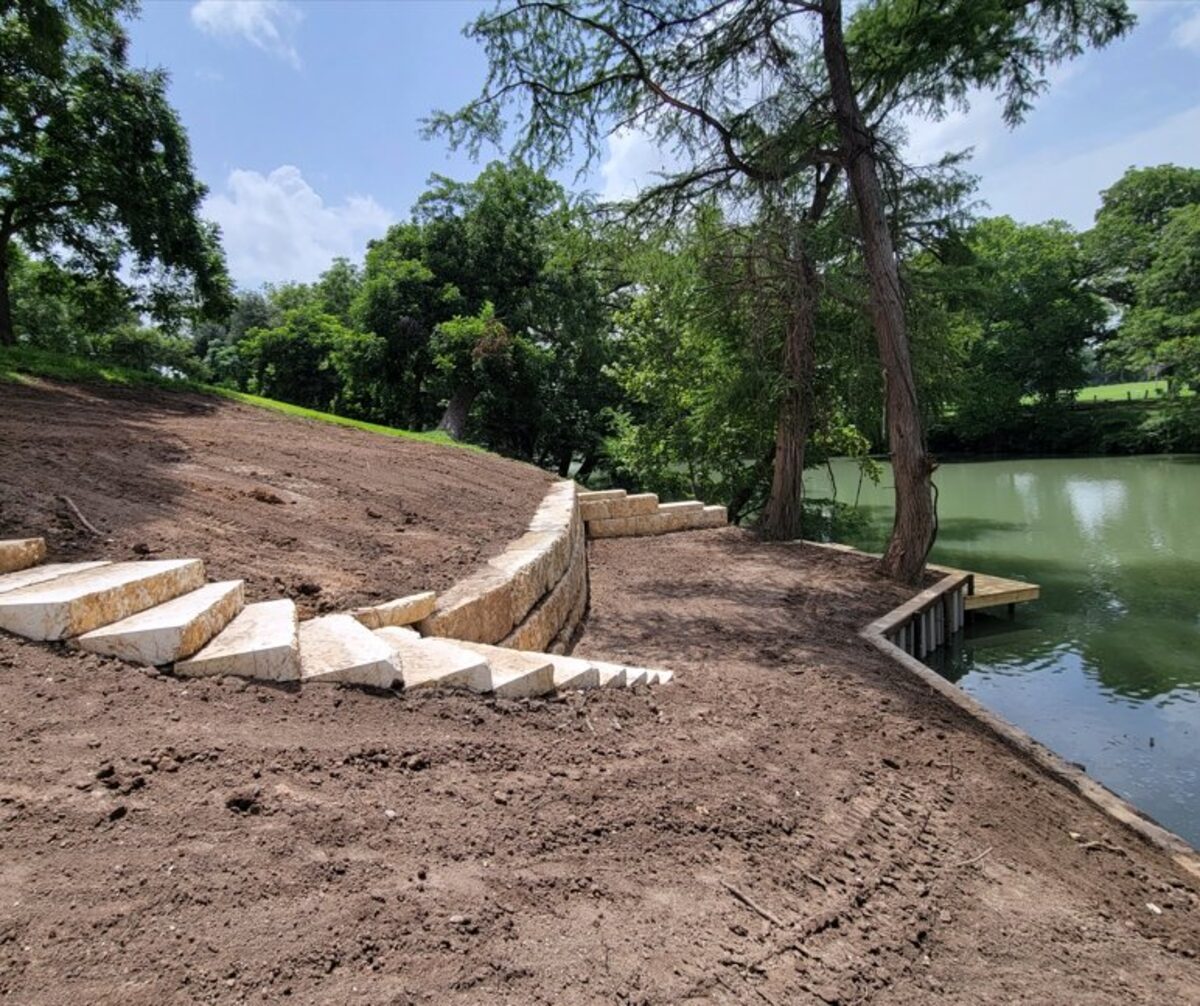
Waterfront Unlimited builds two primary retaining wall styles: limestone quarry block walls (sometimes called butterstick walls) and poured concrete walls. Limestone quarry block walls are a natural fit for the Central Texas landscape and provide both structural performance and a finished appearance. Poured concrete walls are used where additional strength or specific site conditions require it. Both styles are designed for long-term shoreline stabilization and are built to perform through the flood conditions common to Central Texas lakes.
Waterfront Unlimited builds bulkheads, limestone quarry block retaining walls, and concrete retaining walls across the Guadalupe River lake system. Each lake has different shoreline conditions that affect wall design, material choice, and construction methods.
Bulkhead construction and both limestone quarry block and concrete retaining walls. Shoreline protection is especially critical as the lake refills in 2026. Lake McQueeney retaining wall projects →
Steep bank conditions on Lake Placid near Seguin make bulkhead and retaining wall work a priority as the lake refills. Lake Placid retaining wall projects →
Canyon Lake allows retaining walls only — no docks or boathouses. We build limestone quarry block and concrete retaining walls for Hill Country shoreline properties. Canyon Lake retaining wall projects →
Lake Dunlap was restored in 2023 and continues to see strong demand for shoreline stabilization. Lake Dunlap retaining wall projects →
Bulkhead and retaining wall projects on Meadow Lake waterfront properties. Meadow Lake retaining wall projects →